

If you’ve searched anything close to instapage review lately, you’ve probably noticed the same thing I did: most of these articles either read like a sales page in disguise or they’re so generic you can’t tell if the writer actually opened the tool. So I spent real time inside Instapage — building pages, testing the editor, digging through pricing tiers — to give you a straight answer on whether it’s worth your ad budget.
This review covers what the instapage landing page builder actually does well, where it falls short, what you’ll really pay, and whether it holds up against the competition when your goal is building best lead generation landing pages that don’t bleed your ad spend.
Let’s start at the beginning, since a lot of people land here without fully knowing what is Instapage in the first place. Instapage is a standalone landing page platform built specifically for performance marketers — the kind of people running paid campaigns on Google, Meta, or LinkedIn who need a page that matches the ad, loads fast, and converts. It’s not a website builder, and it’s not trying to be one. It does a single job: turn ad traffic into leads or sales.
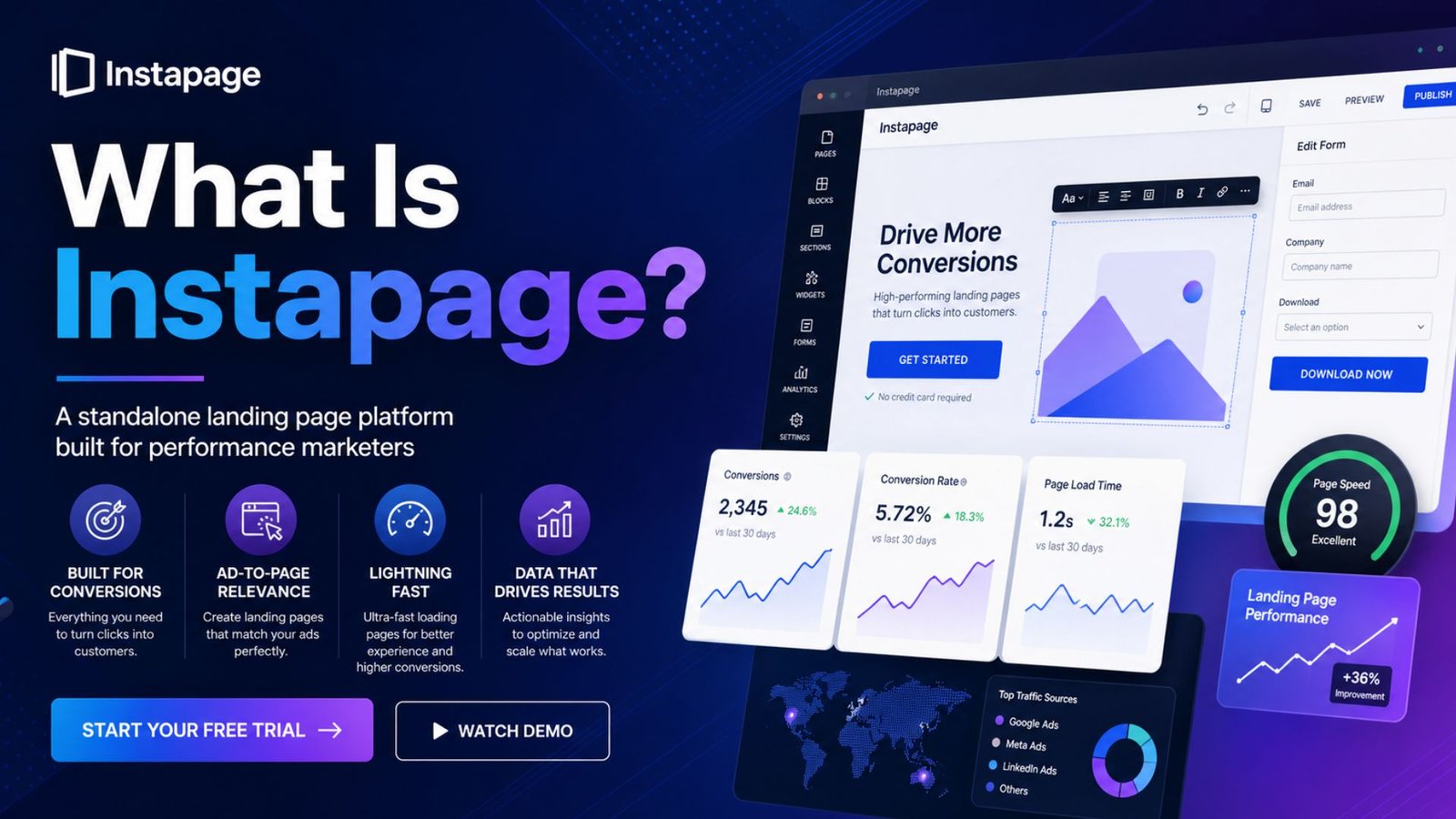
What sets Instapage apart from a lot of competitors is its focus on ad-to-page relevance. The platform was built around the idea that a landing page should feel like a direct continuation of the ad someone just clicked, not a generic template that happens to be live on the internet.
Here’s where I actually got my hands dirty. A few features stood out enough to mention specifically:
AdMap. This is Instapage’s signature feature, and it’s genuinely different from what you’ll find in most other builders. AdMap visually maps your ad campaigns directly to specific landing pages, so you can see — and manage — the connection between what someone clicked and where they landed, all from one dashboard. If you’re running dozens of ad variations, this alone can save hours of manual tracking.
Reusable blocks. Instead of rebuilding the same header or testimonial section across twenty different pages, you create a block once and reuse it everywhere. Update the block, and it updates across every page using it — a small thing that saves a surprising amount of time once you’re managing more than a handful of campaigns.
Server-side A/B testing. Rather than relying on JavaScript that can slow down page load (and hurt your Quality Score on paid ads), Instapage runs its testing server-side. It’s a technical detail, but it matters for page speed, which directly affects both conversion rate and ad costs.
AI content assistance. Instapage has leaned into AI-generated copy suggestions, though it’s worth noting this is more of an assist tool than a full page generator — you’re still building the structure yourself, just with help writing headlines and body copy faster.
Dynamic text replacement. Similar to what you’ll find in competing tools, this swaps in keywords from your ad or search query directly into your landing page headline, which keeps the messaging consistent from click to conversion.
This is usually the question that actually decides things, so let’s answer how much does a landing page cost with Instapage specifically, using current numbers.
Instapage runs on three tiers:
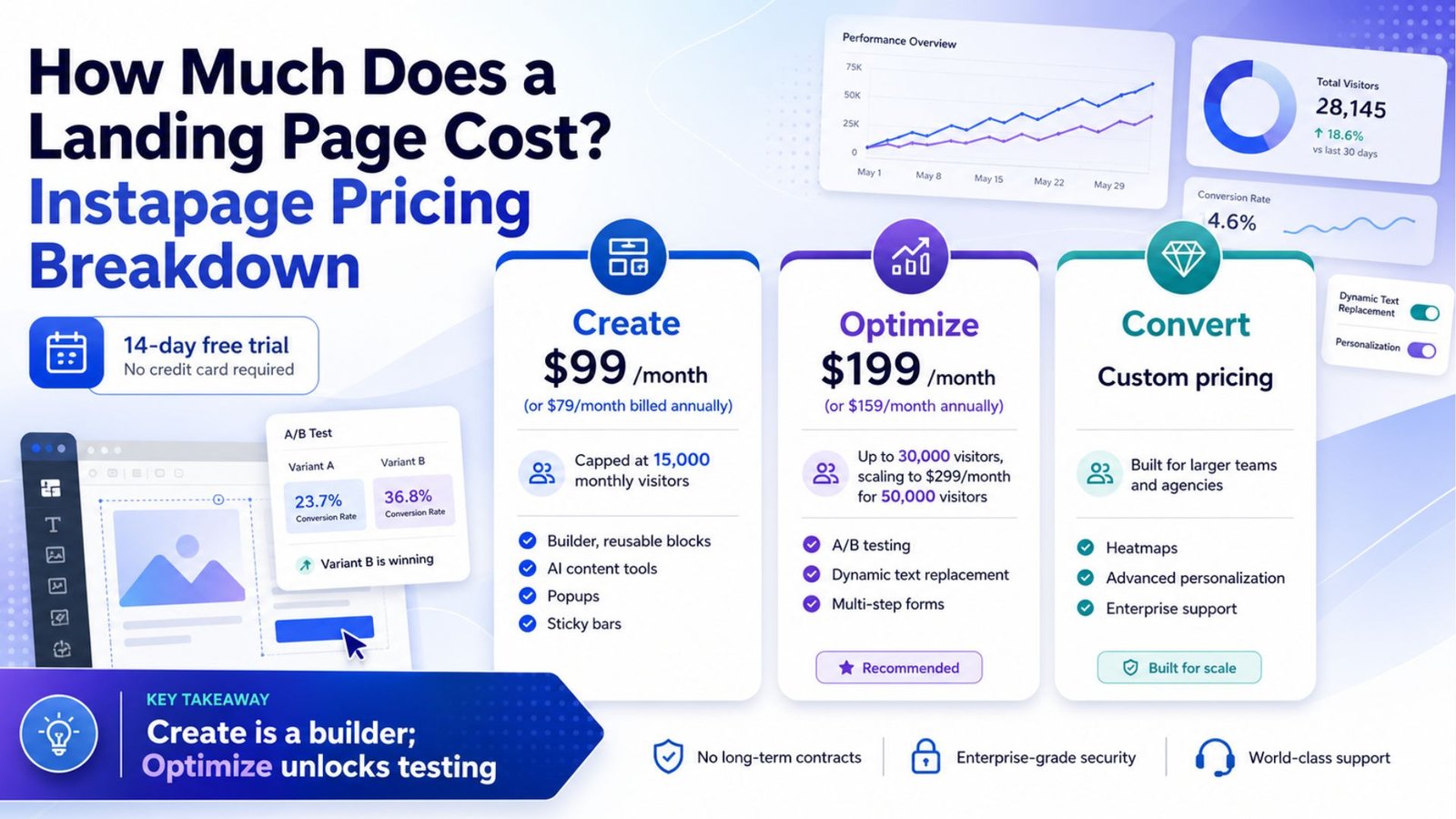
There’s a 14-day free trial across the board, which is enough time to build and test at least one real campaign before committing your card.
Here’s the part worth flagging clearly: the entry-level Create plan is a page builder, not a testing platform. If your whole reason for wanting Instapage is data-backed optimization, you’re really shopping for the $199/month Optimize tier, not the $99 one. That’s a meaningfully different price point than what most comparison articles lead with.
If your goal is putting together best lead generation landing pages, Instapage gives you the right raw materials — but the tool alone won’t do the strategic thinking for you. A few things I noticed that actually move the needle on lead gen specifically:
If you’re coming from a tool with looser template structures — say, comparing leadpages templates against what Instapage offers — you’ll notice Instapage’s templates lean more toward clean, conversion-tested layouts rather than sheer volume of options. Leadpages tends to win on raw template count and price accessibility; Instapage tends to win on the optimization layer sitting behind the page.
A landing page builder only solves half the equation. The other half is knowing how to drive traffic to landing page offers in a way that doesn’t waste the work you put into building it. A few approaches that pair well with a tool like Instapage:
Instapage isn’t cheap, and it’s worth being upfront about that. Compared to platforms offering broader leadpages templates libraries at a lower entry price, Instapage costs more and gates core optimization features behind its second tier. What you’re paying for is the AdMap system, server-side testing infrastructure, and a platform built specifically around high-volume paid traffic rather than general-purpose page building.
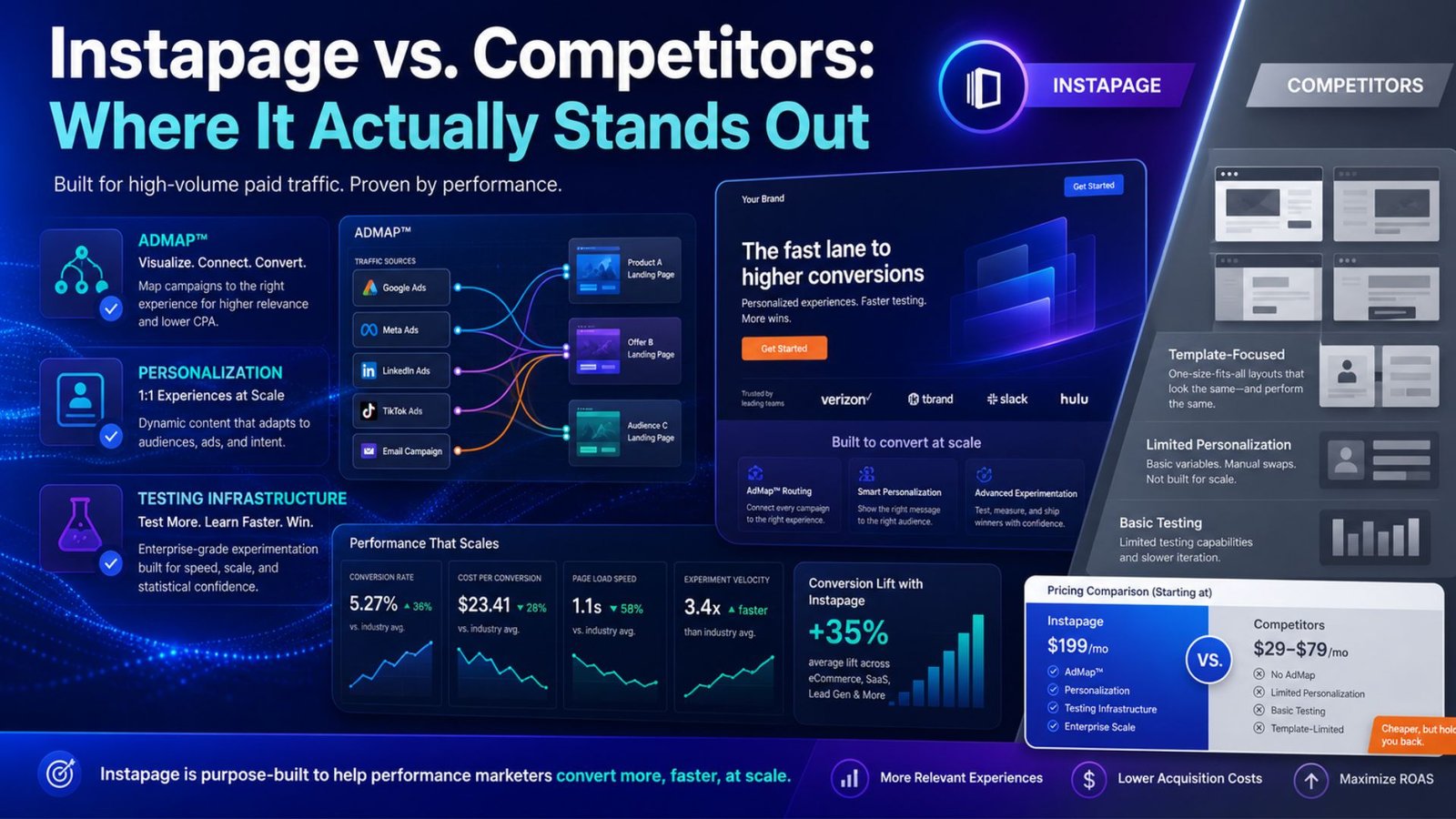
If you’re spending serious money on ads — realistically $10,000 or more a month — the AdMap and personalization tools tend to justify themselves through better ad relevance scores and lower cost-per-click. If you’re just starting out or running a handful of campaigns on a modest budget, the pricing gap between Instapage and cheaper alternatives is harder to justify.
What I liked:
What held it back:
This tool makes the most sense for performance marketers and agencies running consistent paid traffic who need to manage many campaigns at once. If you fit that profile, the Optimize tier is realistically where you should start — the Create plan alone won’t give you the testing tools that make Instapage worth choosing over cheaper builders.
If you’re a smaller business building your first few landing pages on a limited budget, it’s worth comparing the numbers here against other tools before committing, since the gap in both price and feature access at the entry level is real.
Instapage earns its reputation with marketers who run high volumes of paid traffic and need tight control over ad-to-page relevance — AdMap alone is hard to find elsewhere in this category. But it’s not the tool for everyone, and the pricing structure makes that clear: you’re really buying into the $199/month tier if optimization is the whole point of the purchase. If your campaigns and budget match that profile, it holds up well in 2026. If not, it’s worth shopping the alternatives first.
What is Instapage used for? Instapage is used to build standalone landing pages for paid ad campaigns, with tools focused on matching ad messaging to page content and testing which page variants convert best.
How much does a landing page cost with Instapage? Plans start at $99/month for the Create tier (15,000 visitors), scale to 199–299/month for the Optimize tier with A/B testing included, and go to custom pricing for the enterprise-level Convert plan.
Is Instapage better than Leadpages? It depends on your priority. Leadpages generally offers a larger template library at a lower price point, while Instapage focuses more on ad-to-page personalization and testing infrastructure for teams running heavier paid traffic.
Do I need Instapage if I’m just starting with lead generation? Not necessarily. The core testing and personalization tools that make Instapage worth the price sit on the $199/month plan, so smaller budgets may get more value starting with a cheaper builder until traffic volume justifies the upgrade.