
If you’ve spent any time researching online sales tools, you’ve probably run into the name more than once. So let’s answer the question directly before we go anywhere else: what is ClickFunnels, really, and why do so many online business owners swear by it?
In plain terms, ClickFunnels is a software platform built to help you turn a random website visitor into a paying customer, without needing a developer, a designer, or five other tools duct-taped together. It handles the page building, the checkout, the follow-up emails, and often the whole customer journey from click to purchase — all from one dashboard.
That’s the short answer. The rest of this guide breaks down exactly how it works, what it’s used for, what it costs, and whether it’s actually worth your money in 2026.
At its core, ClickFunnels is a sales funnel builder. A “funnel” in marketing terms is just the path a visitor takes from first landing on a page to becoming a customer — usually a landing page, followed by an offer, followed by a checkout, and often one or two upsells along the way.
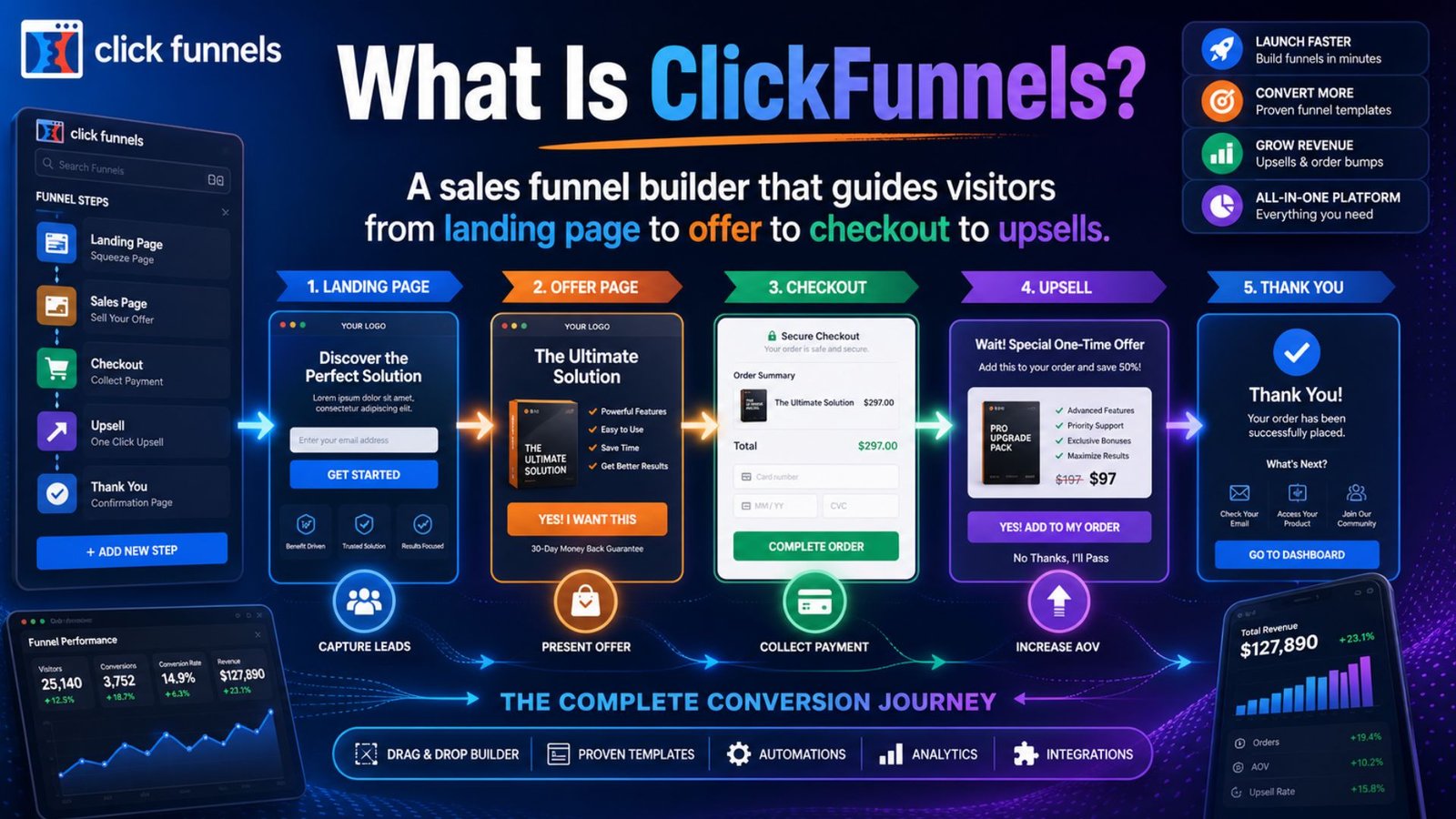
Most website builders are built to create a single page that sits there and looks nice. ClickFunnels was built with a completely different goal: guide a visitor step by step toward a buying decision, using proven page layouts, built-in urgency elements, and one-click upsell technology that keeps the process smooth instead of clunky.
It was originally launched back in 2014 by Russell Brunson and Todd Dickerson, and it grew fast because it solved a real problem — small business owners were paying developers thousands of dollars just to build a single working sales page. ClickFunnels made that process something a total beginner could do in an afternoon.
The platform works around a drag-and-drop editor. You pick a template built for a specific goal — a webinar signup, a product launch, a lead magnet giveaway — and then customize the text, images, and buttons without touching a single line of code.
From there, you connect the individual pages into a sequence. A typical flow looks something like this:
Every step of that journey lives inside ClickFunnels, and every step is tracked, so you can see exactly where visitors are dropping off and fix that specific page instead of guessing.
This is where a lot of people get tripped up — ClickFunnels isn’t just for one type of business. In practice, it’s used for:
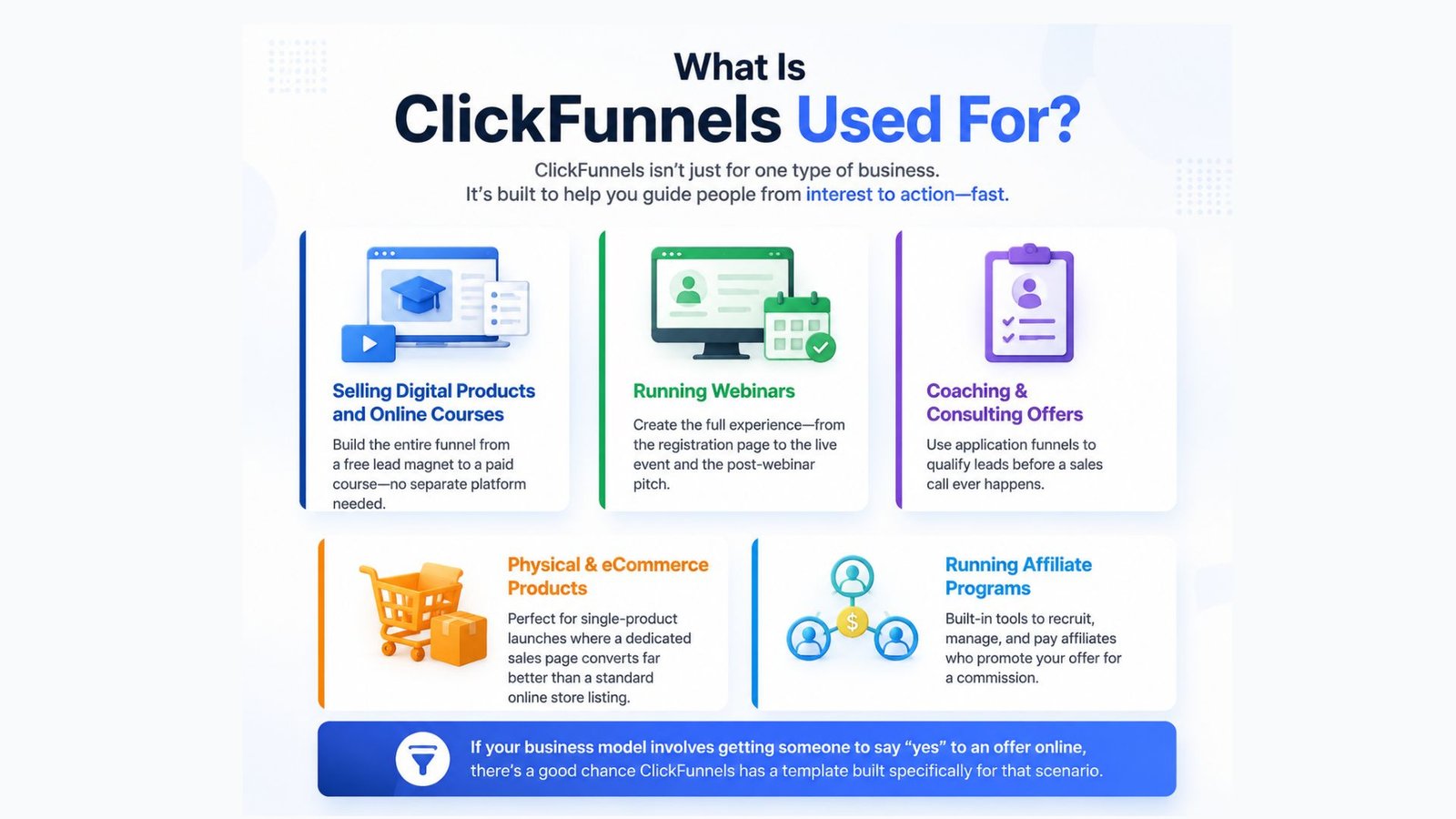
If your business model involves getting someone to say “yes” to an offer online, there’s a good chance ClickFunnels has a template built specifically for that scenario.
A few reasons this platform has held onto its popularity for over a decade:
Speed. A funnel that would take a freelance developer a week or two to build can often be assembled in a single afternoon using existing templates.
Everything in one place. Page building, email automation, checkout, affiliate tracking, and even course hosting all live under one login — meaning fewer monthly subscriptions and fewer integration headaches.
Conversion-focused design. Unlike general-purpose website builders, every template is built around a specific psychological structure: scarcity, social proof, and a clear single call to action per page.
Built-in split testing. You can test two versions of any page and let the data decide which one performs better, without needing a separate analytics tool.
No coding required. The drag-and-drop editor means a total beginner can launch a working funnel without hiring anyone.
Wondering what these pages actually look like in practice? A few common ClickFunnels landing page examples you’ll come across:
The common thread across every example is that there’s no menu bar, no distracting links, and no way to wander off the page — every element points toward one single action.
One of the biggest time-savers on the platform is its library of ClickFunnels funnel templates. Instead of designing a funnel from a blank page, you pick a pre-built structure based on your specific goal — there are templates built specifically for webinars, product launches, book funnels, membership sign-ups, and local business lead generation.
Each template comes pre-loaded with a logical page sequence, so a beginner doesn’t have to figure out funnel strategy from scratch. You’re really just swapping in your own copy, images, and offer details into a structure that’s already been tested across thousands of other businesses.
While it’s not a full replacement for a platform like Shopify when you’re running a large multi-product catalog, ClickFunnels ecommerce funnels shine for single-product or small-catalog launches. A dedicated funnel — with a focused sales page, an order bump, and a post-purchase upsell — routinely converts better than a standard product page buried inside a big online store.
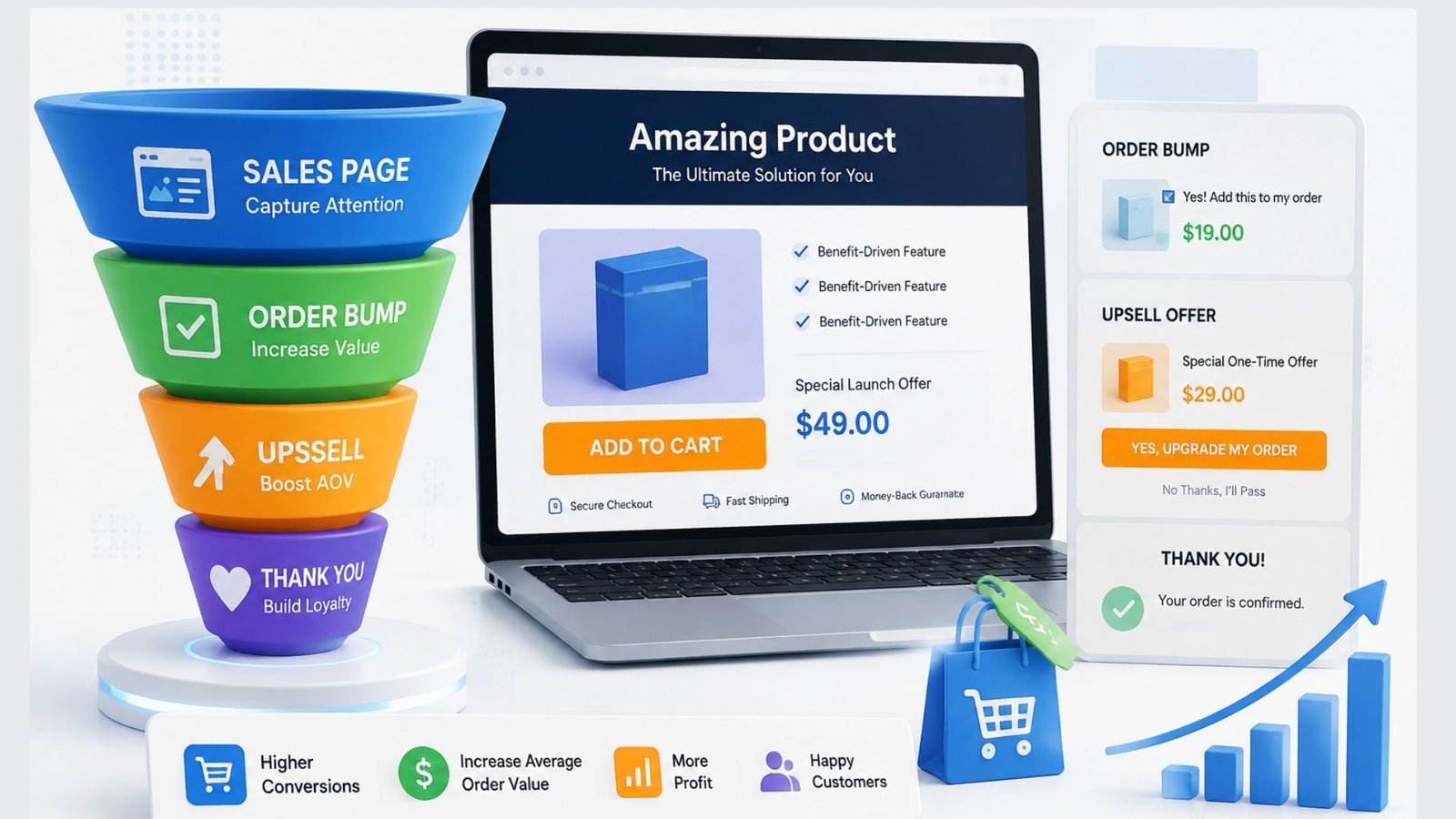
A lot of ecommerce sellers actually run both: a Shopify store for their full catalog, and a ClickFunnels page for their best-selling product or a limited-time launch, where a tighter, distraction-free page pushes conversion rates higher.
Pricing is one of the most searched questions about the platform, and for good reason — it’s not the cheapest tool on the market. As of 2026, the entry-level tier, sometimes referred to as the ClickFunnels Startup plan, starts at $97 a month, or a bit less if you commit to annual billing.
From there, pricing scales up based on how many contacts, team members, and advanced features you need — mid-tier and higher plans run anywhere from $197 to $297+ a month, with an enterprise-level tier priced even higher for high-volume businesses.
Every plan comes with a free trial period and a money-back guarantee, so you can test the platform with your own offer before committing long-term.
Here’s the honest answer: it depends entirely on where your business is right now.
If you already have an offer that converts — even at a small scale — ClickFunnels tends to pay for itself fast. The time saved building funnels, plus the conversion lift from proven templates, usually outweighs the monthly cost within the first few sales.
If you’re still testing an idea and haven’t made your first sale yet, the monthly price can feel steep compared to cheaper alternatives. In that case, it often makes more sense to validate your offer with a simpler, lower-cost tool first, then move to ClickFunnels once there’s real revenue behind the decision.
Search around and you’ll find plenty of ClickFunnels example case studies from coaches, course creators, and ecommerce sellers who scaled a single funnel into a six or seven-figure product line. The most common thread in these success stories isn’t the software itself — it’s that the business already had an offer people wanted, and the funnel simply removed friction from the buying process.
That’s an important distinction. The platform can absolutely accelerate results for a good offer, but it isn’t a shortcut around having something people actually want to buy.
If you’re an existing user, logging in is straightforward — head to the official ClickFunnels login page, enter your registered email and password, and you’re taken directly to your dashboard. If you’ve forgotten your password, the “reset password” link on the login screen sends a reset email within a few minutes. For anyone managing multiple funnels or team members, it’s worth bookmarking the login page directly rather than searching for it each time.
Across independent ClickFunnels reviews, a pretty consistent pattern shows up. Users tend to praise the speed of building a funnel, the quality of the templates, and having email, checkout, and page building under one roof. The most common criticism is the price — especially for smaller businesses comparing it against lower-cost alternatives that offer a free tier.
In short: strong marks for functionality and speed, mixed marks on affordability depending on the size of the business using it.
ClickFunnels is used to build guided sales pages — called funnels — that walk a visitor from their first click through to a completed purchase, often including email follow-up, upsells, and affiliate tracking along the way.
Pricing starts at $97 a month for the entry-level Startup plan, with higher tiers available for businesses that need more contacts, team seats, or advanced features.
It can be, but it works best once you already have an offer that’s converting, even on a small scale. If you’re still testing an idea, a lower-cost tool to validate the offer first is usually the smarter starting point.
Yes — most of the platform’s templates, including webinar pages, product launch pages, and lead magnet opt-ins, can be previewed inside the free trial before you commit to a paid plan.